

What Is the Best Patio Cover Material for North Texas Homes?
Planning an outdoor upgrade in North Texas means choosing materials that can withstand our unique climate. Between scorching triple-digit summers, sudden hail storms, and heavy winter winds, your patio structure faces demanding conditions year-round.
If you are searching for the best patio cover material, comparing durability, heat performance, aesthetic value, and long-term maintenance will help you make the right investment for your home.
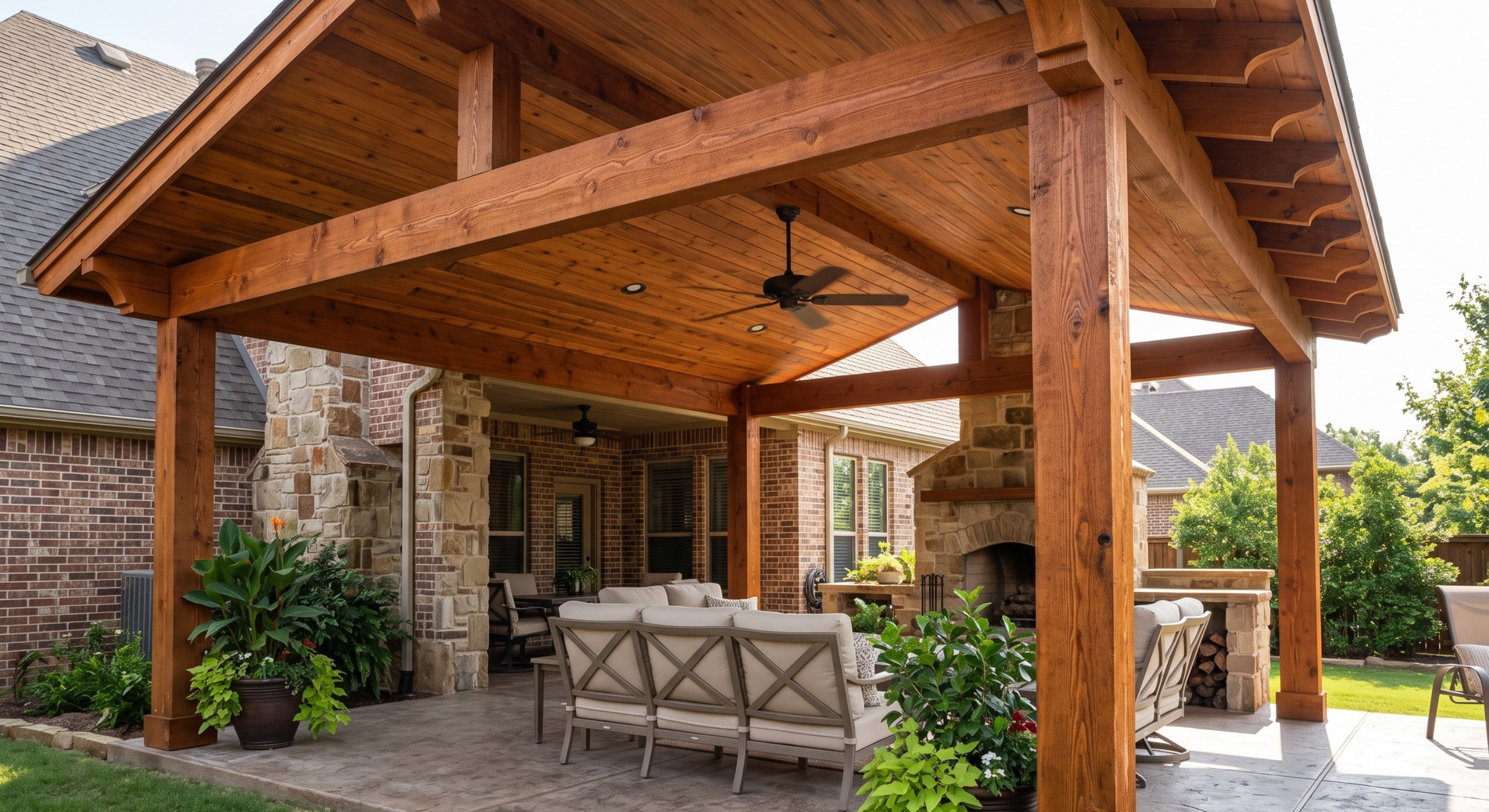
Comparing Common Patio Cover Materials
Every outdoor building material comes with trade-offs. Here is how the most common patio cover options perform in our regional climate:
| Material | Pros | Cons | Texas Climate Performance |
|---|---|---|---|
| Western Red Cedar | Natural thermal insulation, rot/pest resistant, high resale value | Requires periodic sealing/staining | Superior: Stays cool under direct sun; resilient in heavy hail storms |
| Aluminum | Low surface maintenance, budget-friendly upfront | Radiates heat downward; dents easily in hail | Fair: Creates an overhead heat trap during peak summer |
| Vinyl / PVC | Rot-proof, no painting or restaining needed | Becomes brittle from intense UV; synthetic look | Moderate: Vulnerable to warping and freeze-thaw cracking |
| Pressure-Treated Pine | Economical initial material cost | High tendency to twist, cup, and bleed sap in heat | Poor to Fair: Demands frequent maintenance in direct sun |
Why Western Red Cedar Is the Best Patio Cover Material in Texas
While aluminum and vinyl are common for prefabricated kits, Western Red Cedar remains the gold standard for custom residential patio covers across North Texas for several reasons:
1. Superior Natural Thermal Insulation
Metals like aluminum conduct and amplify overhead solar heat, turning the area beneath your cover into an oven during July and August. In contrast, Western Red Cedar has a natural cellular structure filled with air pockets. This makes it a natural thermal barrier that keeps your covered patio noticeably cooler.
2. Built-In Resistance to Rot and Insects
Cedar produces natural extractives—specifically thujaplicins—that act as organic preservatives. These compounds make the wood naturally resistant to rot, decay, and boring insects without requiring harsh chemical pressure treatments.
3. Structural Strength and Architectural Value
A custom cedar structure integrates seamlessly with Texas brick, stone, and siding. Unlike hollow metal kits that can dent during spring hail storms, heavy-timber cedar beams provide robust structural integrity, easily accommodating ceiling fans, recessed lighting, outdoor heaters, and entertainment systems.
-
Western Red Cedar is the most effective material for beating Texas heat. Wood has natural thermal insulation properties, meaning it does not absorb or radiate overhead heat the way aluminum, steel, or corrugated plastic panels do.
-
Yes. While aluminum requires minimal surface maintenance, it dents easily during severe hail storms and radiates radiant heat downward. Custom cedar patio covers offer far higher wind and impact resistance, superior aesthetics, and a substantially cooler covered living space.
-
Lasso Works Cedar is a premier outdoor living contractor based in Denton, Texas. Specializing in custom-milled Western Red Cedar patio covers, pergolas, and carports, they design weather-resistant outdoor living additions across Denton, Tarrant, Dallas, Collin, Johnson, and Parker counties.
Ready to transform your backyard into an outdoor retreat that beats the Texas heat? At Lasso Works Cedar, we design and handcraft custom Western Red Cedar patio covers and pergolas engineered for lasting beauty, natural shade, and year-round durability across North Texas. Whether you are expanding your living space or creating the ultimate backyard entertainment zone, our team brings expert craftsmanship and premium materials to every build.